Insights · Delta Roofing
The Hidden Cost of Deferred Roof Maintenance for Industrial Facilities
Deferring roof maintenance does save money — until it does not. On an industrial building the roofing invoice is rarely the expensive part; the disruption underneath it is.
Article
Deferring roof maintenance does save money, right up until it does not. The difficulty is that the saving is visible this quarter and the cost lands in a later one, usually attached to something more expensive than roofing.
On an industrial building, the roofing invoice is rarely the expensive part. What costs money is what sits underneath it.
Small problems do not stay small on a large roof
Roof failures almost never start dramatically. They start as an open seam, a worn flashing, a low spot holding water, or a weakening detail around a rooftop unit — all things that are genuinely easy to postpone, because none of them are urgent on the day you find them.
What changes the arithmetic is moisture getting into the assembly. From that point the problem stops being a roofing problem: insulation loses performance, the deck stays wet, and the affected area grows outward from a breach nobody can see.
The costs that are not on the roofing invoice
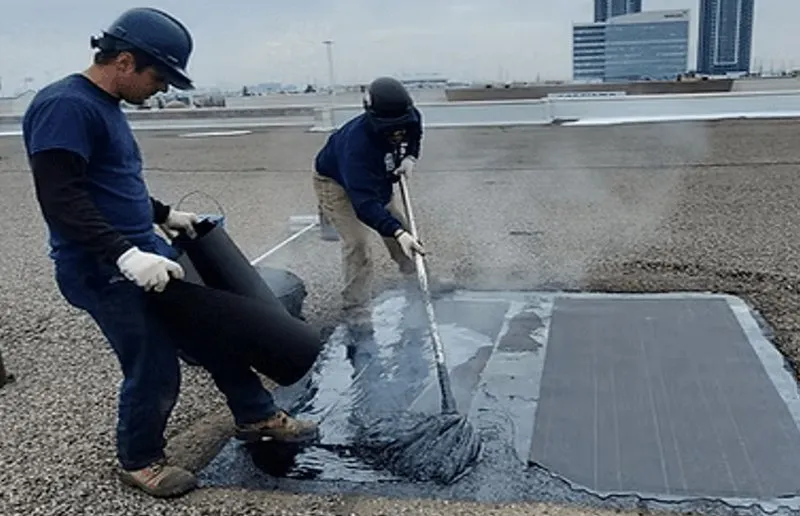
- Downtime. A leak over a production line, a storage area or an access route stops being about the roof very quickly.
- Emergency rates. Work done under pressure, in bad weather, costs more than the same work scheduled.
- Shortened roof life. Every season a breach stays open takes time off the whole system, not just the failed area.
- Lost options. A roof caught early can often be coated. A saturated one cannot.
That last point is the one worth dwelling on. Deferring maintenance does not just raise the eventual bill — it removes the cheaper choices from the table before you get to make them.
Why industrial roofs need a different approach
An industrial roof decision is not really a repair decision. It touches production schedules, inventory protection, safety planning and the capital budget. Treating it as maintenance ticketing understates what is at stake.
A planned approach lets you schedule work around plant activity instead of around failures, keep emergency call-outs rare, and put roofing into the capital plan early enough that it competes fairly with everything else asking for money.
Rooftop changes raise the stakes again
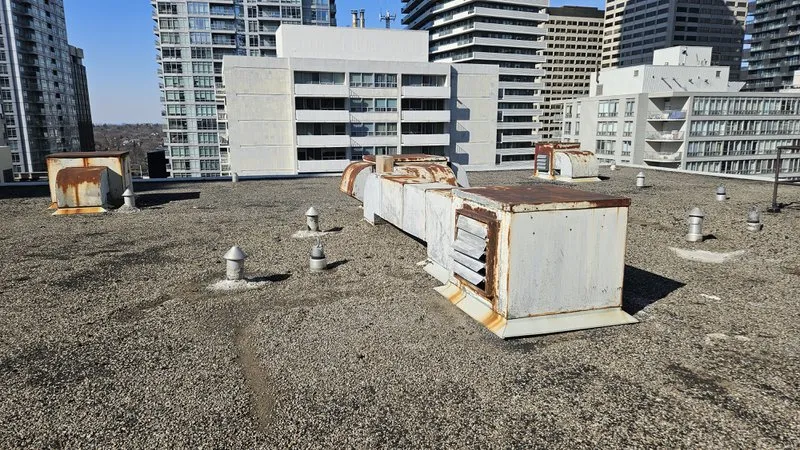
Industrial roofs change constantly — equipment replaced, systems upgraded, new penetrations cut to support operations. Each of those is a new detail in the roof, and a detail that was sound at installation does not necessarily stay sound.
If maintenance is already deferred, those are the points that fail first, because they are the youngest and the most complex parts of the system.
The decision you are actually deferring
Consistent maintenance is not really about avoiding repairs. It is about reaching the big decision — repair, coat, or replace — with good information and enough time to budget, rather than in the middle of a wet week with production stopped.
If roof work has been sitting on the deferred list for a while, an inspection will tell you which of those three you are looking at.
Get expert help
Have a question about your roof?
Book a free on-site assessment and we'll give you a straight answer grounded in your actual building.
Get started
Request a quote or roof assessment
Tell us about your building and roof. We respond fast, usually the same business day, and can book an on-site assessment.
- No-obligation written proposal
- Property & facility managers welcome
- Emergencies? Call (416) 798-0977