Insights · Delta Roofing
Emergency Roofing Services: When to Call and What to Expect
Not every roof problem is an emergency, and the first visit is not a repair. Knowing what actually warrants a call — and what a stabilisation visit is meant to achieve — makes the whole thing go faster.
Article
Two things make a roof emergency go badly: calling for something that could have been scheduled, and expecting the first visit to fix it. Both are avoidable, and knowing the difference makes the response faster and cheaper.
What actually warrants an emergency call
Urgency is rarely about how dramatic the damage looks. It is about whether water is getting in now, and what is underneath it.
- Active water entry during rain
- Visible storm or wind damage
- Lifted, punctured or torn roof sections
- Flashing failure at edges, kerbs or penetrations
- Leaks affecting equipment, inventory or operations
- A recurring leak that has suddenly got worse
A slow drip above a storage aisle can be scheduled. The same drip above a switchgear room cannot. The building decides the urgency as much as the roof does.
What to do before anyone arrives

Protect people and the interior first: water near electrical systems, wet floors and falling ceiling material are the immediate risks. Then limit the damage — containers under drips, cover or move what is vulnerable — and photograph everything while it is still clear.
What not to do is improvise on the roof. Unplanned patching in bad weather is how people get hurt, and a patch in the wrong place hides the evidence that would have found the real entry point.
The first visit stabilises; it does not usually repair
This is the expectation worth setting early. Emergency work is about stopping the situation getting worse: controlling water entry, securing exposed areas and making the roof safe. A permanent repair generally comes after, in conditions where it can be done properly and will last.
That is not the response being incomplete. Membrane work done in driving rain on a wet substrate tends to fail, which means doing it twice.
What the crew is looking for
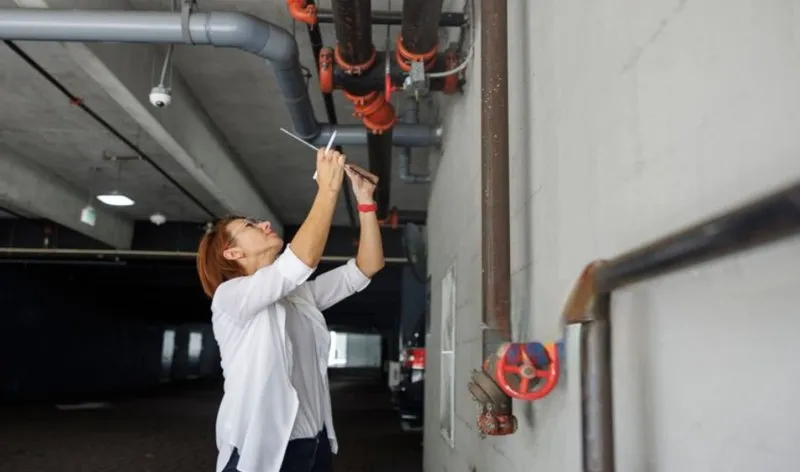
Not just the point where water became visible inside. Because water travels below the surface, the crew works outward — membrane damage, flashing condition, drainage, punctures, the detailing around rooftop equipment, and any nearby detail under similar stress.
A storm that lifted one section has usually stressed its neighbours. Finding that on the emergency visit is what stops the second call-out next month.
What follows
Once the roof is stable, the question changes from "stop the water" to "what does this actually need". Sometimes the answer stays local and becomes a scheduled repair. Sometimes the emergency has exposed hidden moisture or drainage problems that call for a proper condition assessment before anyone commits to a scope.
If water is coming in now, call the emergency line — it is staffed around the clock.
Get expert help
Have a question about your roof?
Book a free on-site assessment and we'll give you a straight answer grounded in your actual building.
Get started
Request a quote or roof assessment
Tell us about your building and roof. We respond fast, usually the same business day, and can book an on-site assessment.
- No-obligation written proposal
- Property & facility managers welcome
- Emergencies? Call (416) 798-0977