Insights · Delta Roofing
How Detailed Roof Condition Reports Support Better Capital Planning
A roof report that says the roof "looks worn" is useless for planning. The one you need answers a harder question: which budget year does this roof belong in, and what does it cost to postpone it?
Article
A roof report that concludes the roof "looks worn" has told you nothing you can plan around. The report worth paying for answers a harder question: which budget year does this roof belong in, and what does waiting cost?
That is a capital planning question, not a maintenance one — which is why roof condition belongs in the same conversation as every other major asset in the building.
What a useful report contains
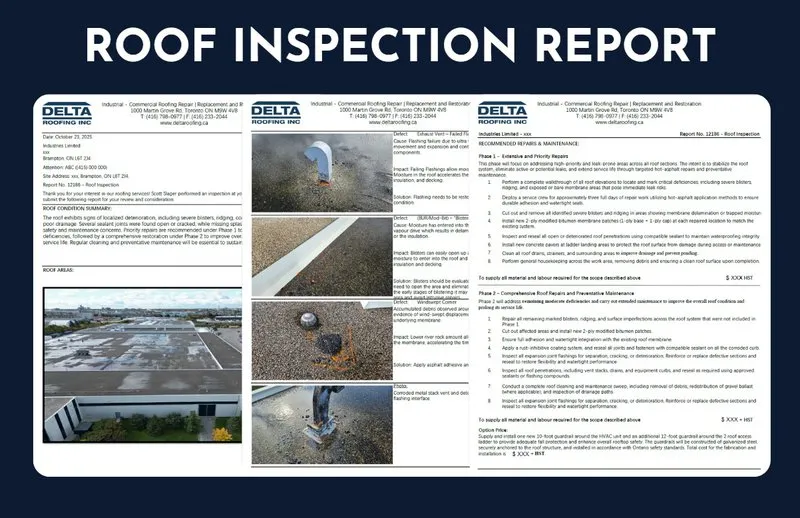
It should explain what is happening, where, and what follows from it. A detailed condition analysis looks at the decking, the supports, the materials and the system as a whole — not just the surface — and gives you four things you can actually use:
- How the roof is performing now, in specifics rather than adjectives
- Which repairs come first, and which can wait a season
- Whether the problems are isolated or system-wide
- How close the roof is to the point where repair stops being the sensible answer
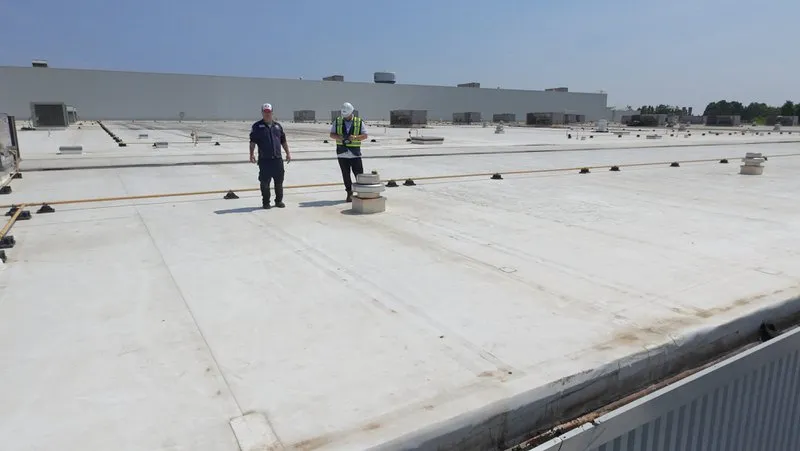
That last one is the number the budget conversation turns on.
Isolated or widespread is the whole question
Two roofs can present identically from inside the building. One has three failed details and thirty years of life in the rest of the system. The other is uniformly at the end of its service life and happens to be leaking in three places first.
The first is a repair. The second is a replacement being paid for one emergency at a time. Nothing visible from a ceiling tile distinguishes them — a condition report does.
Avoiding both expensive mistakes
Reporting protects you at both ends. A roof that looks rough is not automatically finished; surface weathering can sit on top of a perfectly sound assembly, and replacing it early writes off years you already paid for.
Equally, a roof that still looks serviceable can be carrying moisture through most of its insulation. Repairing that one repeatedly is the more expensive error, because every year of delay removes the option of restoring it rather than tearing it off.
Reports before a transaction
The same document does different work during a purchase, a handover or a change of use. A pre-purchase or pre-handoff inspection turns the roof into a measurable part of due diligence, with a cost and a timeline attached — rather than something the new owner discovers during the first heavy rain.
What to do with the report
A report that gets filed has failed. The point is that it resolves into a decision: routine work through maintenance and repair, re-detailing where rooftop changes created weak points, restoration while that is still viable, or replacement scheduled on your timing rather than the weather’s.
If the next budget cycle includes a roof and nobody can say which of those it needs, start with the report.
Get expert help
Have a question about your roof?
Book a free on-site assessment and we'll give you a straight answer grounded in your actual building.
Get started
Request a quote or roof assessment
Tell us about your building and roof. We respond fast, usually the same business day, and can book an on-site assessment.
- No-obligation written proposal
- Property & facility managers welcome
- Emergencies? Call (416) 798-0977